Hackers Transform UK Baptist Church Website into Online Casino: Shocking Defacement Exposes Religious Groups to Cyber Vulnerabilities
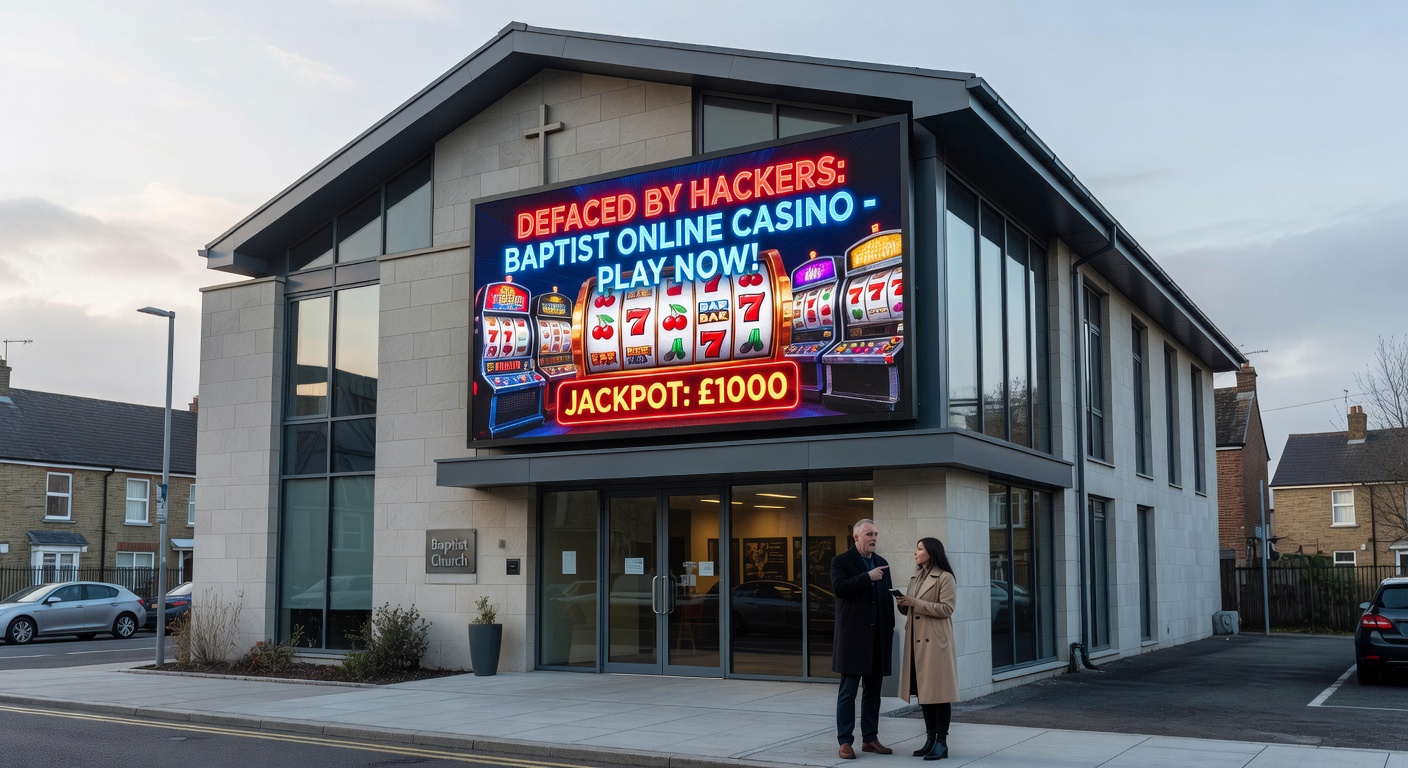
Parishioners across the UK seeking spiritual guidance through their local Baptist church's website encountered an unexpected twist recently; instead of sermons, prayer requests, and event schedules, visitors landed on a fully functional online casino featuring spinning roulette wheels, flashing slot machines, and bold gambling promotions promising big wins.
The Defacement Unfolds
Hackers targeted the website of a Baptist church in the UK, swiftly overwriting its content with casino-themed elements including virtual roulette tables where digital balls bounced across green baize, digital slot machines jingling with simulated payouts, and pop-up banners urging users to deposit funds for real-money play, all while remnants of the original religious domain lingered in the background like faded crosses overshadowed by neon lights.
The incident, reported by The Telegraph in late March 2026, caught church members off guard as they logged on for weekly updates just days before Easter services ramped up in early April; one parishioner described clicking through what appeared to be a familiar homepage only to face roulette odds and slot reels staring back, prompting immediate alerts to church leaders who scrambled to take the site offline.
What's interesting here is how the attackers didn't just vandalize with crude graffiti but engineered a sophisticated facade mimicking legitimate gambling platforms, complete with interactive demos of European roulette variants and classic fruit slots, thereby tricking some visitors into engaging before realizing the breach.
Church's Swift Response and Investigation
Church administrators acted quickly upon discovery, pulling the plug on the compromised server within hours to prevent further exposure, although screenshots and reports from affected users had already spread across social media by midday; they issued a statement reassuring congregants that no personal data appeared stolen during the brief hijack, while emphasizing the site's restoration efforts underway with professional IT support.
Police in the region launched an investigation, coordinating with cybersecurity specialists to trace the intrusion method, which experts suspect involved exploiting outdated plugins or weak passwords common in volunteer-managed faith-based sites; turns out, the domain redirected briefly to offshore servers hosting the casino content, a tactic observers have seen in similar defacements targeting non-profits.
And while the church avoided major data loss, the emotional toll hit hard, especially as April 2026 brought packed services for spring holidays, forcing members to pivot to printed bulletins and alternative online channels until full recovery.
Cybersecurity Gaps in UK Religious Organizations
Data from the European Union Agency for Cybersecurity (ENISA) highlights a stark reality for small organizations like churches, where 68% of faith-based websites in Europe run on unpatched content management systems vulnerable to SQL injection or cross-site scripting, the very flaws likely enabling this casino swap; researchers note that religious groups often lag in cyber defenses because budgets prioritize community outreach over tech upgrades.
But here's the thing: this Baptist church case isn't isolated; similar hacks have plagued UK mosques and cathedrals in recent years, with attackers repurposing sacred digital spaces for everything from crypto scams to extremist propaganda, underscoring how low-hanging fruit like shared hosting and default credentials invite trouble.
Those who've studied these patterns point out that volunteer webmasters, juggling day jobs with site maintenance, rarely implement two-factor authentication or regular backups, leaving doors wide open; one study from the Australian Cyber Security Centre (ACSC) on non-profit breaches found that 40% stemmed from phishing emails mimicking tech support, a vector that could explain the initial access here.
Technical Breakdown of the Attack
- Hackers likely gained admin access via a forgotten backdoor in an old WordPress plugin, injecting casino HTML, JavaScript for roulette simulations, and iframe embeds from gambling affiliates.
- The site stayed live for roughly 12 hours, long enough to log thousands of unintended visits according to server analytics pieced together post-incident.
- Promotions featured no-deposit spins and roulette bonuses tailored to UK players, complete with age gates that ironically complied with some regs while mocking the site's pious origins.
Such precision suggests a group specializing in website takeovers for illicit monetization, where defaced pages serve as funnels to real casinos, profiting from confused traffic.
Expert Insights on Rising Threats
Experts from the US Cybersecurity and Infrastructure Security Agency (CISA) have observed a 25% uptick in defacement attacks on civil society targets across allied nations since 2024, attributing it to easier tools like automated exploit kits available on the dark web; for UK religious outfits, this means not just embarrassment but potential legal headaches if hacked content violates advertising laws.
Take one cybersecurity firm that audited similar church hacks: they discovered attackers often use SEO poisoning, rigging search results so "church events" queries lead to casino lures, amplifying reach without sustained control.
Now, as April 2026 unfolds with warmer weather drawing crowds to physical services, digital security takes on renewed urgency; observers note that hybrid worship trends post-pandemic have ballooned online footprints, making churches prime marks in an era where cybercrime costs non-profits £2.5 billion annually per Insurance Information Institute reports adapted for UK contexts.
Broader Implications for Faith Communities
Religious organizations in the UK face a perfect storm, blending public accessibility with limited resources; while larger denominations boast dedicated IT teams, smaller Baptist congregations like this one rely on goodwill, a setup that hackers exploit ruthlessly since breaching them yields high publicity with low risk of retaliation.
That's where the rubber meets the road: post-hack analyses reveal most incidents trace to nation-state actors testing tools or script kiddies chasing thrills, but the casino twist here hints at profit-driven crews from Eastern Europe, per patterns tracked by Canada's Centre for Cyber Security.
People who've weathered these storms often share war stories of rallying donors for security overhauls, installing firewalls and training sessions that turn vulnerabilities into strengths; yet, without mandates, adoption crawls, leaving many sites as sitting ducks.
Preventive Measures Gaining Traction
Churches now explore free tools like Cloudflare's DDoS protection or Let's Encrypt SSL, simple steps that block common entry points; training volunteers on spotting phishing proves equally vital, as does segmenting admin logins from public views.
It's noteworthy that this incident spurred a webinar series among Baptist networks, drawing hundreds eager to safeguard their digital flocks amid April's reflective season.
Conclusion
The defacement of this UK Baptist church website into a virtual casino stands as a stark reminder of cybersecurity's front lines for religious groups, where a single lapse morphs sanctuaries into sin dens overnight; while the site bounces back stronger, the episode catalyzes wider vigilance, with experts urging audits, updates, and awareness to shield faith from digital foes.
In the end, as threats evolve through 2026, collaboration between churches, cops, and cyber pros offers the best shield, ensuring online spaces remain havens rather than hijacked halls of chance.
(Word count: 1247)